Posts

Showing posts with the label programming

TinkerTech 1: Smart-Oven

Image
I'm a bachelor. I live in an apartment. With my cat (who never helps me cook). And I'm okay with that. What I'm not okay with is having such an old oven that I can't set it to bake a Costco meal to be ready when I get home! If you aren't there, you aren't baking. I suppose I am a tad spoiled after renting from my manager before he and his family arrived in Reno. Now that oven was nice. So I'm contemplating an outfit to my apartment oven to provide room for programmability.

Animating the Cal Poly ME Logo

Image
There was a point this summer at which I decided to learn something a bit new. I had seen other people include animated GIFs in their email signatures, so I decided I wanted to animate Cal Poly's Mechanical Engineering Department Logo. Figure 1 shows the original image, taken from  http://me.calpoly.edu/openhouse/ . Figure 1: Original Mechanical Engineering (Cal Poly) Logo A gear in motion is a perfectly simple way to add a little "cool" factor to your email signature. This blog post aims to introduce you to some of the (free/open-source) tools I used to animate the logo. However, if you merely want to use the animated GIF in Figure 2 , skip to the Using The Animated GIF  section.

Bash Script: Timing a Hard Refresh

Problem The Cal Poly Robotics Club has a slideshow that runs 24/7 on a computer (we call it halftop) in the club window. The half-of-a-laptop is hooked up to a screen so we can bombard any (and all) lucky Bonderson visitors with information about CPRC. Eventually they will join us or at least think we are awesome. The slideshow is actually available on Google Drive , which is really convenient for editing purposes. However, the fullscreen slideshow has to be restarted manually if any edits are made. Sure, that's not that difficult if there is someone in the room all the time, but the more autonomous the better!

Returning to Fourier Transformations with Maxima

Image
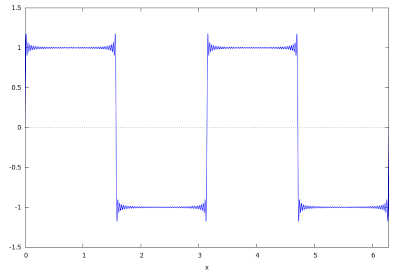
The last time that I worked with Fourier Transformations was in Linear Analysis, nearly 3 years ago. Now I am taking a class in Mechanical Vibrations, and we are returning to this theory. The other week, while learning to use a spectral analyzer, we had to derive the first 3 Fourier coefficients for a sine wave, square wave, and triangle wave. All of that aside, after lab I played around with some fourier theory in Maxima. Maxima Maxima is a symbolic math program (similar to Mathematica) that I ran into last quarter in order to supplement Octave (Matlab equivalent). Like Octave (which does only numerical analysis) Maxima is completely free. I like the version of Maxima called wxMaxima , and I have that installed on Ubuntu. You can define an equation in maxima such as: s: a^2 + 7 = b*4 + a/3 Then you can solve for b in one step: solve(s,b) And it simply returns b = a^2/4 + a/12 + 7/4. You can do other cool things such as summation, integration, ...

Metrology Internship, Summer 2012

Image
This is quite a late post, but I wanted to finally post my videos that I took over the summer at my Internship. I was working at Alta Devices the entire summer on a project which I called the Wafer Analysis Station (WAS). The company uses GaAs wafers to make their solar cells, and these wafers are used over and over again, as many times as possible. Therefore, the surface must be inspected regularly to make sure it does not need to be resurfaced and is still suitable for the necessary processes.

Python: Finding Duplicate Files

I've begun to learn a little bit of python because I'd like to make a script (that works in Windows or Linux) for finding duplicate files (whether the filenames are the same or not). This will mostly be useful in cleaning up my music library, for I'm suspicious that playing around with different programs has created more duplicates of my music files than I have already found. Yes, I realize that someone out there has probably already written a script for such a task, but where would be the fun in using that? This is how I practice my love for programming.

Arduino & Tri-Colored LEDs

Image
I'm currently working on an unnamed  project which requires the integration of tri-color LEDs (RGB). These are merely four-pin LEDs with a common anode or cathode and an input pin for red, green, and blue. With varying currents, a multitude of colors can be produced. So I created a C++ (arduino) library for handling such LEDs. Since most of my knowledge of programming is in C, learning about classes in C++ is a significant accomplishment for me.